





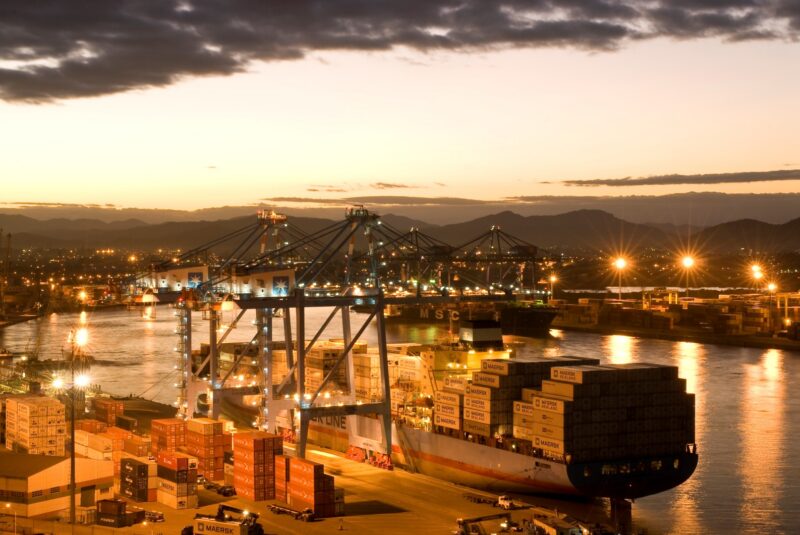
Over the past eighteen months, private operators have been awarded long-term concessions at ports, private train operating companies have been granted access to key freight corridors for the first time in decades, and the Public-Private Partnership (“PPP”) framework underpinning these deals has been substantially streamlined. Individually, these developments may appear technical. Collectively, they represent one of the most significant shifts in how South Africa’s logistics infrastructure is funded and operated in decades, and the implications for business competitiveness, export performance, and investment returns are only beginning to be understood.
Why the Starting Point Matters
South Africa’s freight rail volumes fell 34% between 2017 and 2022, from 226 million tonnes to a historic low of approximately 150 million tonnes. Freight that should have moved by rail moved by road, at a higher cost. Port congestion at Durban’s container terminal added days and cost to supply chains across every exporting sector. South Africa lost its position as the world’s third-largest iron ore exporter due to rail and port constraints, which limited exports to 55 million tonnes in 2023.
These were not abstract inefficiencies. They showed up in cost lines, working capital requirements, and contract terms structured around unreliable delivery windows. Infrastructure underperformance functioned as a hidden tax on every business that depended on the movement of goods, and that tax was priced into how South African businesses were assessed by investors and lenders alike.
What Is Actually Changing
The reform model now being implemented is not a promise of future investment. Several of the most important deals are already signed and capital is being committed.
In December 2025, Transnet awarded International Container Terminal Services (“ICTSI”), one of the world’s largest container terminal operators, a 25-year concession to manage Durban’s Pier 2 container terminal, with a committed R11 billion investment to increase annual container handling capacity by approximately 40%. The significance lies not in the capital figure but in the incentive structure. ICTSI’s business model depends on operational performance. It marks a shift from a model where performance was largely a public sector responsibility to one where operational outcomes directly affect the operator’s returns. Durban was already recognised as the most improved port in the 2025 Container Port Performance Index. It is a starting point, not an arrival, but a measurable directional shift.
In Cape Town, a 25-year agreement with FFS Tank Terminals to operate a liquid bulk terminal (used for fuel, chemicals, and similar products) has brought over R195 million in private investment and doubled storage capacity. The port now has ten licensed terminal operators, eight of them privately owned, shifting the model away from a single state operator towards a more competitive ecosystem.
On rail, eleven private freight operators received conditional approval in August 2025 to run their own trains across 41 routes and six key freight corridors, covering coal, iron ore, manganese, chrome, agricultural products, fuel, and containers. The open access model, which separates infrastructure ownership from train operations, allows private capital and expertise onto a network Transnet continues to own. The new entrants are expected to add 20 million tonnes of freight capacity annually from the 2026/27 financial year, providing additional capacity on corridors that have become a bottleneck for exporters.
The common thread is an incentive structure that state monopolies structurally lack. Private operators with long-term concessions and capital at risk have compelling reasons to improve performance because their returns depend on it.
Why This Reform Is Different
South Africa had announced infrastructure plans before. What distinguishes the current phase is that much of the debate has moved beyond policy and into execution. Long-term concessions have been awarded, private operators have committed capital, and access agreements have been signed. The question is no longer whether government intends to involve private capital in logistics infrastructure. It is whether the projects now underway can deliver measurable improvements in capacity, reliability, and cost.
The Infrastructure Premium
If execution follows intent, the consequences will extend well beyond ports, rail networks, and logistics operators.
South African exporters have effectively been paying an infrastructure premium for years. Rail bottlenecks, port delays, and the need for logistics workarounds increased the cost of getting goods to market. If those constraints ease, exporters do not merely become more efficient; they become more competitive relative to producers in other jurisdictions who never carried those costs. For businesses whose margins have been partially absorbed by workaround logistics for years, an improvement in infrastructure reliability is an earnings event.
For logistics businesses, improved rail performance does not automatically mean a weaker road freight sector. It changes where value is created. Businesses focused on integrated logistics solutions stand to benefit from a more efficient transport network. Operators dependent on long-haul bulk freight volumes that migrate back to rail will face pressure. The businesses best placed are those that have anticipated this transition rather than assumed the current model is permanent.
For manufacturers, agricultural processors, and industrial operators, the significance lies in market access. South Africa has long possessed the productive capacity to compete internationally in several sectors, but not always the logistics system to support that ambition. Improvements in rail and port performance do not simply reduce costs, they expand the range of markets that can be served competitively.
Infrastructure as a Baseline Assumption
Infrastructure has been a discount applied to South African businesses for so long that it has become a baseline assumption rather than a variable. Historical financial performance, transaction pricing, and lending decisions all reflected the expectation that logistics constraints would remain a structural feature of the operating environment.
Those assumptions were rational for the conditions that produced them. The question is whether they remain appropriate for the conditions now emerging. A mining exporter or agricultural business with access to the new private rail corridors is beginning to operate with a cost structure that its historical financials do not reflect. A terminal-dependent business that has secured access to upgraded port infrastructure has a reliability profile that deals done in comparable businesses over the last five years do not capture.
The critical question is no longer whether reform is taking place. The deals are signed and capital is being committed. The question is which projects will execute successfully, which sectors will benefit first, and whether businesses exposed to those improvements are still being assessed through the lens of an infrastructure environment that no longer fully reflects reality. For investors, lenders, and advisers working with South African businesses, that gap between historical assumption and emerging reality is where the most consequential analytical work now sits.
For much of the last decade, infrastructure was treated as a fixed constraint. The possibility that it may become a source of competitive advantage is a much newer idea, and one that some businesses are likely to benefit from sooner than others.